Installing appropriate grow lights for starting seeds indoors provides the critical light spectrum and photon intensity tender vegetable sprouts require to develop thick, compact stems and vibrant green foliage. While south-facing residential windows may seem convenient, natural winter and early spring sunlight is filtered, directional, and rarely delivers the sustained foot-candles needed to prevent weak, spindly seedling growth.
Artificial horticultural lighting replicates natural solar rays, driving vigorous photosynthesis during the darkest months of late winter. By controlling daily photoperiods and fixture height, home gardeners can cultivate stocky tomato transplants, sturdy sweet peppers, and compact brassica seedlings that transition effortlessly into backyard beds without experiencing debilitating transplant shock.
Before assembling your indoor propagation shelving, consulting an organized raised bed planner software ensures you calculate accurate plant counts and map out your outdoor garden dimensions in advance. Reviewing the University of Maryland Extension indoor seedling guide reveals that insufficient light intensity is the single most common cause of early seedling failure among home growers, resulting in fragile stems that snap under spring winds.
Pairing reliable lighting fixtures with a dedicated indoor manual like our starting seeds indoors manual allows you to synchronize indoor seed sowing with your regional climate. Referencing our regional zone 6 planting schedule ensures your light-grown transplants reach optimal transplant size precisely as outdoor spring soil warms to hospitable planting temperatures.
Comparing LED and Fluorescent Grow Lights for Propagation
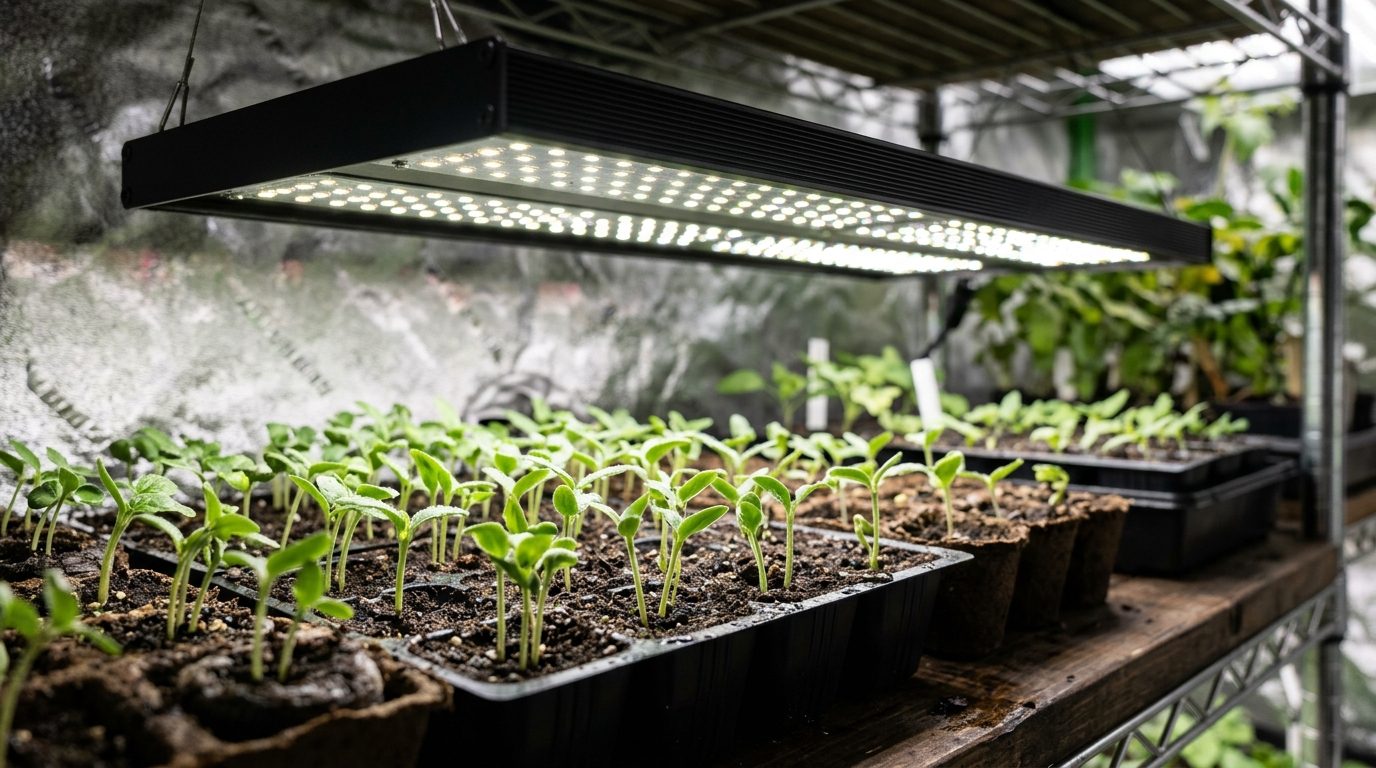
Modern indoor gardeners primarily choose between two main categories of lighting technology: high-efficiency light-emitting diodes (LEDs) and traditional high-output T5 fluorescent tubes. Both options provide the balanced color spectrum required for vegetative seedling development, yet they differ significantly in electrical efficiency, operating temperature, and fixture lifespan.
Standard household incandescent bulbs should never be used for seed propagation. Incandescent filaments emit excessive infrared heat that scorches tender young foliage while producing negligible amounts of the blue light wavelengths essential for compact vegetative growth.
Full-Spectrum LED Panels for Energy Efficiency
Full-spectrum LED grow lamps represent the current gold standard for home propagation setups. LED diodes consume fifty to sixty percent less electricity than comparable fluorescent ballasts while generating virtually no downward radiant heat. This thermal efficiency allows growers to position lights directly above delicate leaves without risking thermal leaf burn or rapidly drying out cellular seedling trays.
In addition, LED fixtures offer operating lifespans exceeding fifty thousand continuous hours, eliminating the recurring annual expense of replacing spent fluorescent tubes. High-quality white-light LED panels provide a pleasant, natural color rendering that makes inspecting foliage for pests or nutrient deficiencies easy and accurate.
Standard T5 Fluorescent Tubes for Starter Shelves
High-output T5 fluorescent fixtures have served home gardeners and commercial growers dependably for decades. Equipped with cool-white bulbs rated at sixty-five hundred Kelvin, T5 tubes emit strong blue-spectrum wavelengths that stimulate compact stem thickening and lush chlorophyll synthesis. Their long, slender profile provides uniform, edge-to-edge light distribution across standard four-foot-long propagation wire shelving units.
Research published in the Clemson University Extension artificial lighting factsheet explains that fluorescent tubes gradually lose spectral output over time, even while still visibly shining. For optimal seedling growth, replace fluorescent propagation bulbs every two to three growing seasons.
Optimizing Fixture Distance Above Sprouting Seeds
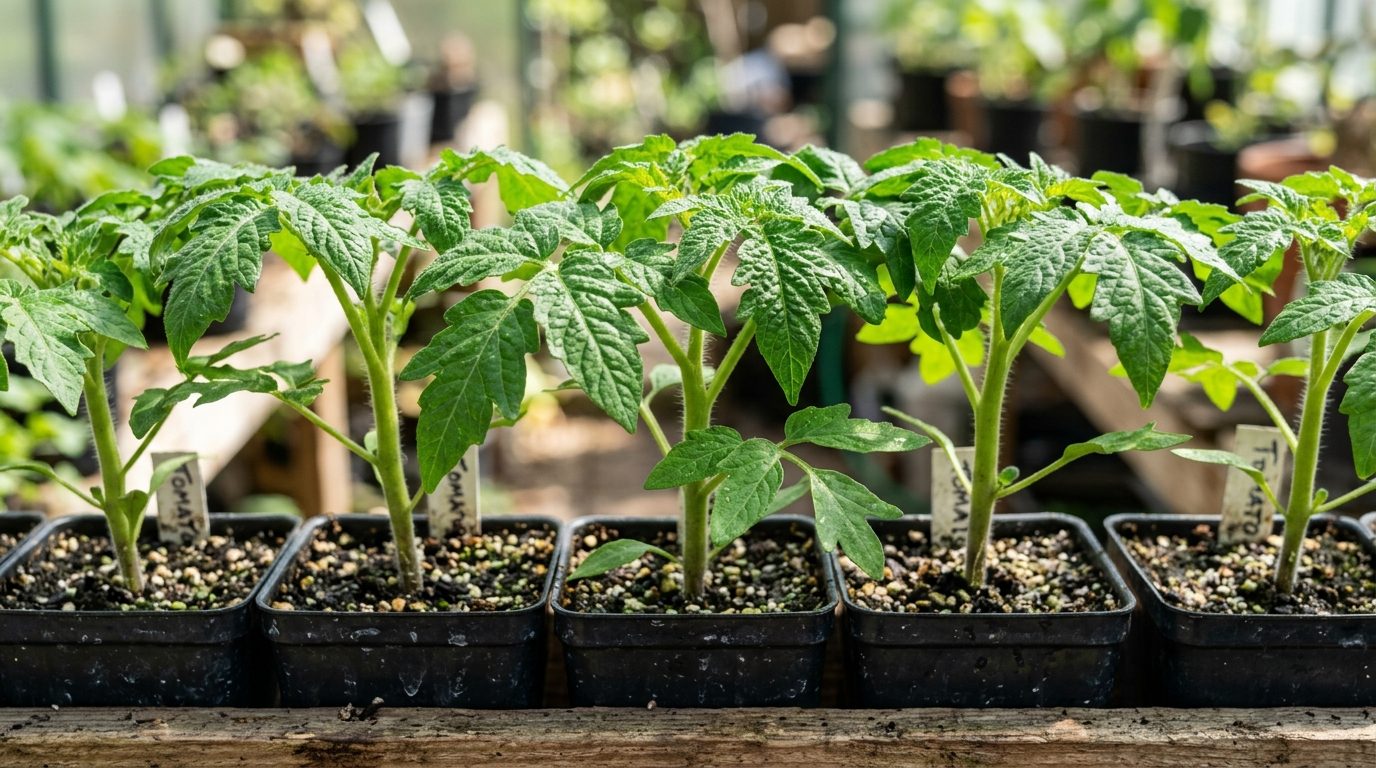
The distance between your lighting source and the seedling canopy directly dictates the light intensity plants receive. According to the inverse square law of light, doubling the distance between a lamp and a plant reduces the light intensity reaching the leaves by seventy-five percent. Positioning lamps too far above seedling flats causes stems to stretch desperately upward, creating tall, fragile, leggy plants that struggle outdoors.
Conversely, placing hot fixtures directly in contact with plant leaves can scorch tender foliage. Finding and maintaining the optimal vertical clearance throughout the indoor growing cycle is crucial for developing stocky, robust transplants.
Maintaining Proper Clearance Over Canopy Leaves
For high-output T5 fluorescent tubes, maintain a constant clearance of two to four inches between the bulbs and the tallest leaves of the seedling canopy. For modern full-spectrum LED fixtures, maintain a distance of four to six inches for young seedlings, adjusting upward slightly if leaves exhibit signs of light bleaching or downward curling.
Inspect seedling trays daily to ensure fast-growing varieties like tomatoes or squashes have not grown into physical contact with lighting fixtures overnight. Prompt adjustments protect tender terminal buds from heat stress.
Adjusting Suspension Chains as Seedlings Mature
Suspend lighting reflectors using adjustable hanging fixtures, such as metal jack chains or ratcheting rope pulleys. These simple mechanical suspension systems allow you to raise lights smoothly in one-inch increments as your seedling canopy expands upward over the weeks of indoor care.
Keeping lights movable also facilitates easy access for bottom watering, thinning seedlings, and top-dressing cell trays with organic fertilizer. Always adjust both ends of the light fixture evenly so illumination remains uniform across the entire flat.
Setting Daily Timer Schedules When Starting Seedlings
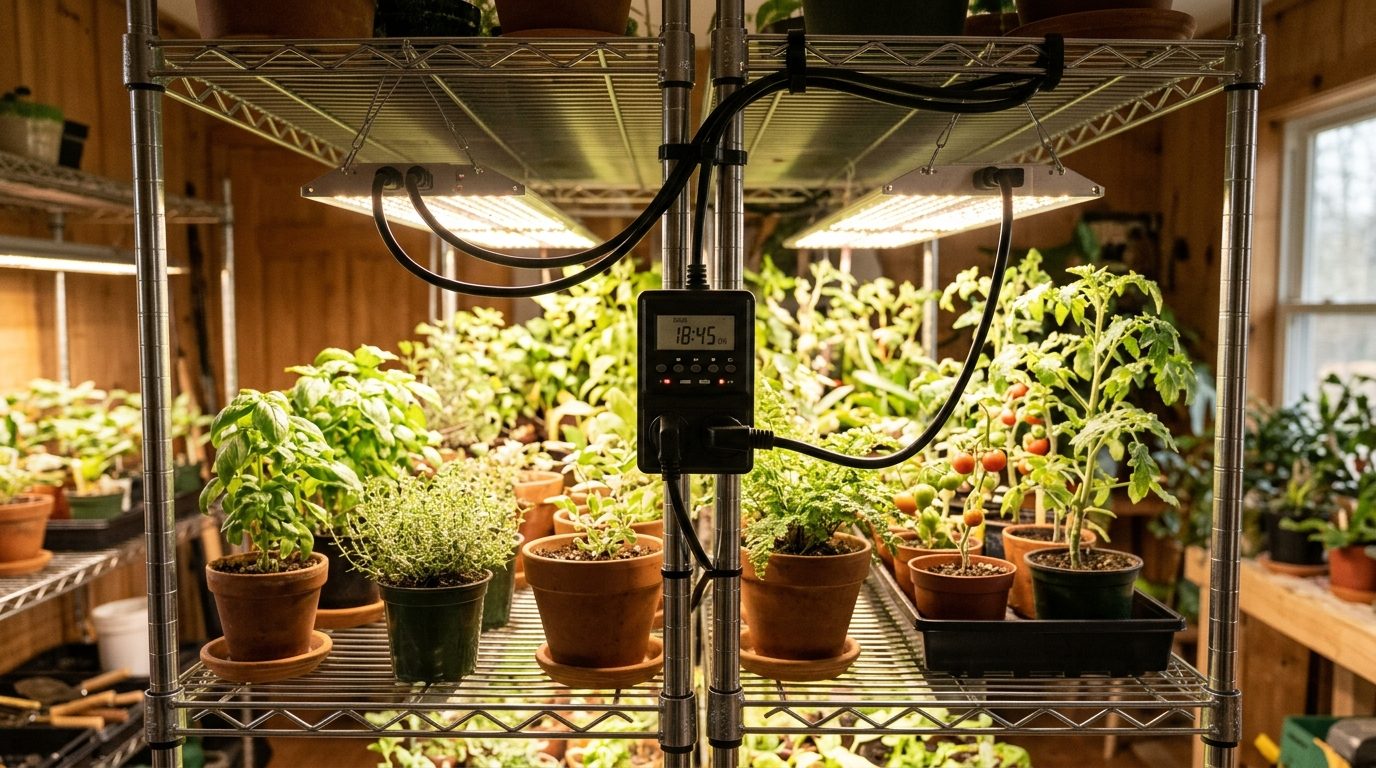
Vegetable seedlings require predictable, uninterrupted cycles of illumination and darkness to regulate biological processes. During light hours, seedlings perform active photosynthesis, converting photon energy, water, and carbon dioxide into simple sugars for vegetative expansion. During darkness, plants metabolize those sugars to construct cell walls, extend root systems, and synthesize plant hormones.
Attempting to manage lighting switches manually inevitably leads to irregular photoperiods, forgotten timers, and stressed seedlings. Connecting your lighting setup to an inexpensive mechanical or digital outlet timer automates the entire process reliably.
Recommended Hours of Continuous Illumination
Set your lighting timer to deliver fourteen to sixteen hours of continuous bright light every day, followed by eight to ten hours of complete, undisturbed darkness. This extended photoperiod compensates for the lower overall intensity of artificial lamps compared to direct outdoor summer sun, ensuring seedlings receive sufficient daily light integrals.
Never leave propagation lights burning twenty-four hours a day. Continuous light exposure disrupts natural circadian rhythms, exhausts cellular enzymes, and frequently causes leaf chlorosis and stunted growth in vegetable species.
Why Young Plants Require Nightly Dark Cycles
The dark period is when plants perform vital cellular respiration and transport carbohydrates from leaves to expanding root tips. Without a dedicated nightly resting period, root development slows and plants exhibit reduced drought tolerance when installed in outdoor garden beds.
Maintain consistent darkness without light pollution from bright household rooms during the scheduled dark cycle to maintain steady, stress-free seedling metabolism.
Balancing Warmth and Air Circulation Indoors
Proper illumination is only one half of the indoor growing equation; managing air circulation and ambient temperature around lighting shelves is equally critical. Enclosed growing rooms or closets quickly accumulate excess humidity and stagnant heat generated by ballasts, creating ideal conditions for fungal pathogens.
Position a small oscillating fan near your propagation shelving, running it on its lowest setting to circulate gentle air currents across seedling canopies. This gentle air movement strengthens stem tissue through thigmomorphogenesis, the biological process where physical movement stimulates plants to produce sturdier, thicker cell walls.
Additionally, steady air circulation prevents moist boundary layers from lingering around plant stems, virtually eliminating damping off and foliar fungal diseases. Maintain ambient shelf temperatures between sixty-five and seventy degrees Fahrenheit during light periods for balanced, sturdy vegetative growth.
Transitioning Young Transplants to Natural Sunshine
Seedlings cultivated exclusively under artificial fixtures produce leaves optimized for artificial spectra and sheltered indoor air. These tender indoor leaves lack the waxy cuticle layer and protective pigments necessary to withstand the intense ultraviolet radiation and drying winds of the open outdoors.
Transition your seedlings gradually through a dedicated seven-to-ten-day hardening off protocol before permanent bed installation. Begin by placing flats in a shaded, protected outdoor location for two hours on the first day, gradually exposing plants to morning sunlight and outdoor breezes over subsequent days.
By day eight, your sturdy, light-grown transplants will display tough emerald foliage, thick fibrous root balls, and heavy structural stems fully prepared to thrive and deliver bountiful harvests in your backyard raised garden beds.
Frequently Asked Questions
How close should overhead lamps hang above tender vegetable sprouts?
Overhead T5 fluorescent tubes should hang two to four inches above the seedling canopy, while modern LED panels perform best when suspended four to six inches above tender leaves. Maintaining close clearance ensures young seedlings receive high photon intensity, preventing stems from stretching and becoming fragile.
Can regular household light bulbs replace horticultural fixtures?
No, standard household incandescent or decorative bulbs cannot replace horticultural fixtures. Standard household bulbs emit excessive radiant heat that scorches tender foliage while lacking the blue and red spectral wavelengths required for active photosynthesis. Full-spectrum horticultural LEDs or T5 fluorescent lamps are essential.
How many hours each day should indoor fixtures remain switched on?
Indoor fixtures should remain switched on for fourteen to sixteen hours daily, followed by eight to ten hours of uninterrupted darkness. Connecting fixtures to an automatic appliance timer ensures consistent daily photoperiods that stimulate robust photosynthesis while providing necessary rest for root expansion.
What causes young vegetable stems to become thin and leggy?
Thin, leggy seedling stems are caused by insufficient light intensity, fixtures positioned too far above the canopy, or high ambient temperatures that accelerate stem elongation. Suspending lights close to plants and running an oscillating fan to provide gentle stem movement encourages thick, stocky seedling growth.