Selecting the most suitable raised bed gardening plants allows home growers to maximize yields from compact backyard growing spaces while maintaining optimal soil vitality and ecological balance. Because elevated boxes contain aerated, nutrient-dense soil mixes that never suffer from foot traffic compaction, plants develop extensive, fibrous root systems that support dense vegetative growth and bountiful harvests.
Successful small-space gardening relies on choosing compact, bush-habit, or vertically trainable crop varieties specifically suited to container beds. By pairing deep-rooting vegetables with shallow-rooted leafy greens and aromatic herbs, gardeners establish diverse polyculture systems that deter pests naturally and optimize sunlight capture across every square foot of growing area.
Before ordering seeds or filling seedling trays, mapping your planting boxes with a digital raised bed planner companion chart ensures you maintain proper spacing intervals and prevent aggressive vining crops from overwhelming slower neighbors. Reviewing research from the Utah State University Extension research on companion planting reveals that polyculture arrangements stimulate beneficial microbial partnerships in the root zone and dramatically enhance plant resilience compared to monoculture rows.
Integrating companion pairings detailed in our comprehensive companion planting chart and selecting varieties from our guide to easy vegetables to grow creates a balanced, continuous production system from spring through autumn frost.
Compact Fruiting Plants for High Summer Yields
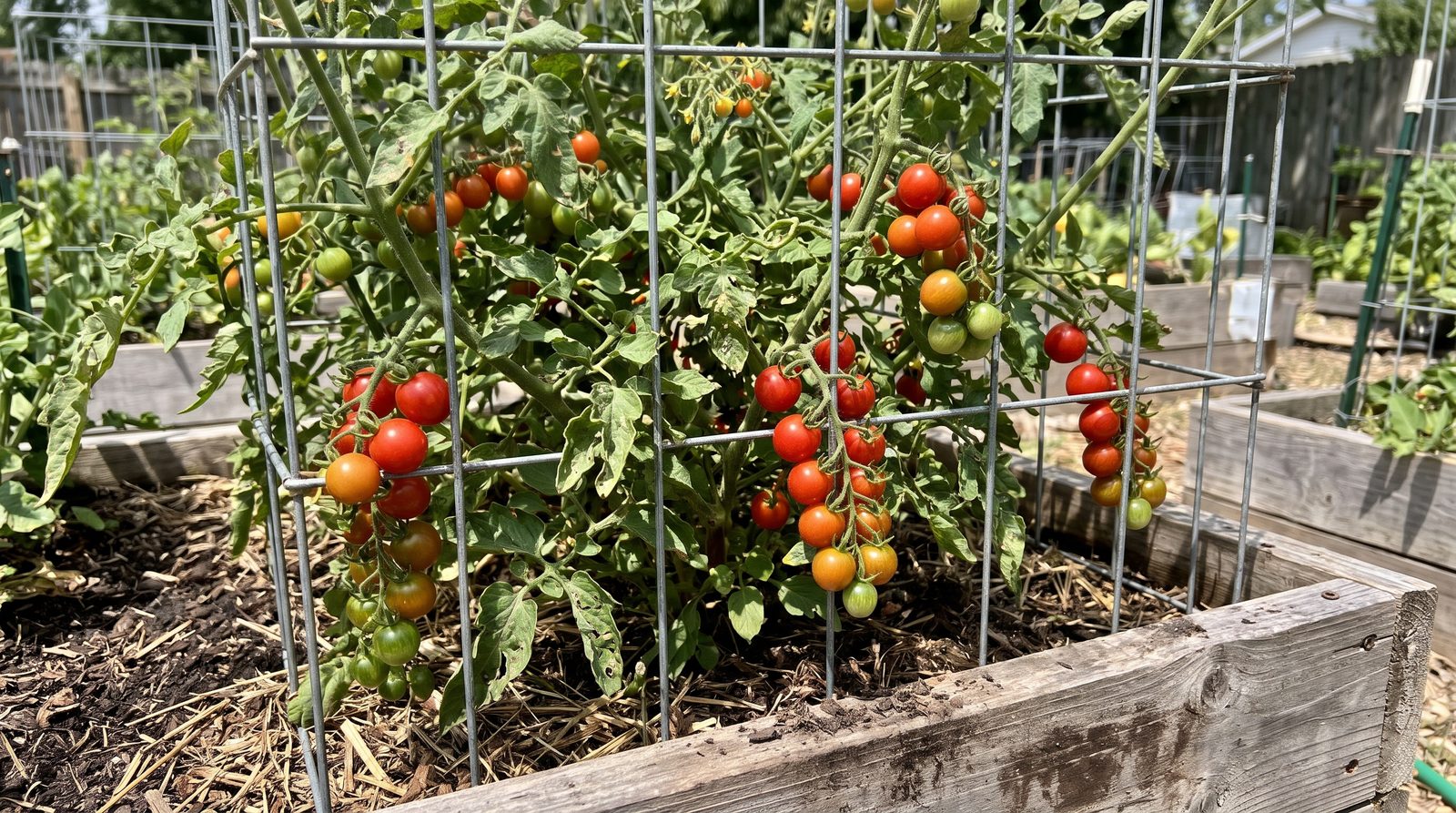
Fruiting vegetables form the flavorful heart of summer kitchen harvests, yet sprawling commercial farm varieties quickly overrun confined garden frames. Prioritizing compact determinate varieties or training vigorous indeterminate vines up vertical structural supports allows gardeners to produce heavy yields without sacrificing precious square footage.
Practical growing techniques outlined by the University of Maryland Extension vegetable growing techniques demonstrate that elevated planters deliver exceptional soil drainage and warm up weeks earlier in spring, providing the thermal boost warm-season nightshades need for rapid early establishment.
Determinate Tomatoes and Bush Salad Cucumbers
Determinate bush tomatoes, such as Celebrity, Roma, and Glacier, reach a predetermined height of three to four feet, produce an abundant flush of ripe fruit over several weeks, and require minimal pruning. Their sturdy upright habit fits neatly into corner box spaces supported by basic wire tomato cages, leaving surrounding soil open for companion herbs and greens.
Bush cucumber varieties like Spacemaster and Bush Champion produce crisp, full-sized slicing cucumbers on compact two-foot vines. Sown directly into garden soil once spring frost danger passes, these compact plants yield heavily without spreading across walking pathways or smothering neighboring vegetables.
Prolific Bell Peppers and Sweet Italian Frying Peppers
Sweet bell peppers and elongated Italian frying peppers flourish in the warm, well-draining environment of raised boxes. Compact pepper plants rarely exceed two to three feet in height, making them exceptional middle-row anchors. Varieties like Sweet Chocolate, King of the North, and Jimmy Nardello produce thick-walled, sweet fruits continuously until late autumn freezes.
Provide a thin bamboo stake at planting time to support brittle branches when plants become laden with heavy maturing fruit. Mulching the surrounding soil with clean straw conserves essential root moisture during hot summer dry spells.
Intensive Leafy Greens for Raised Garden Boxes
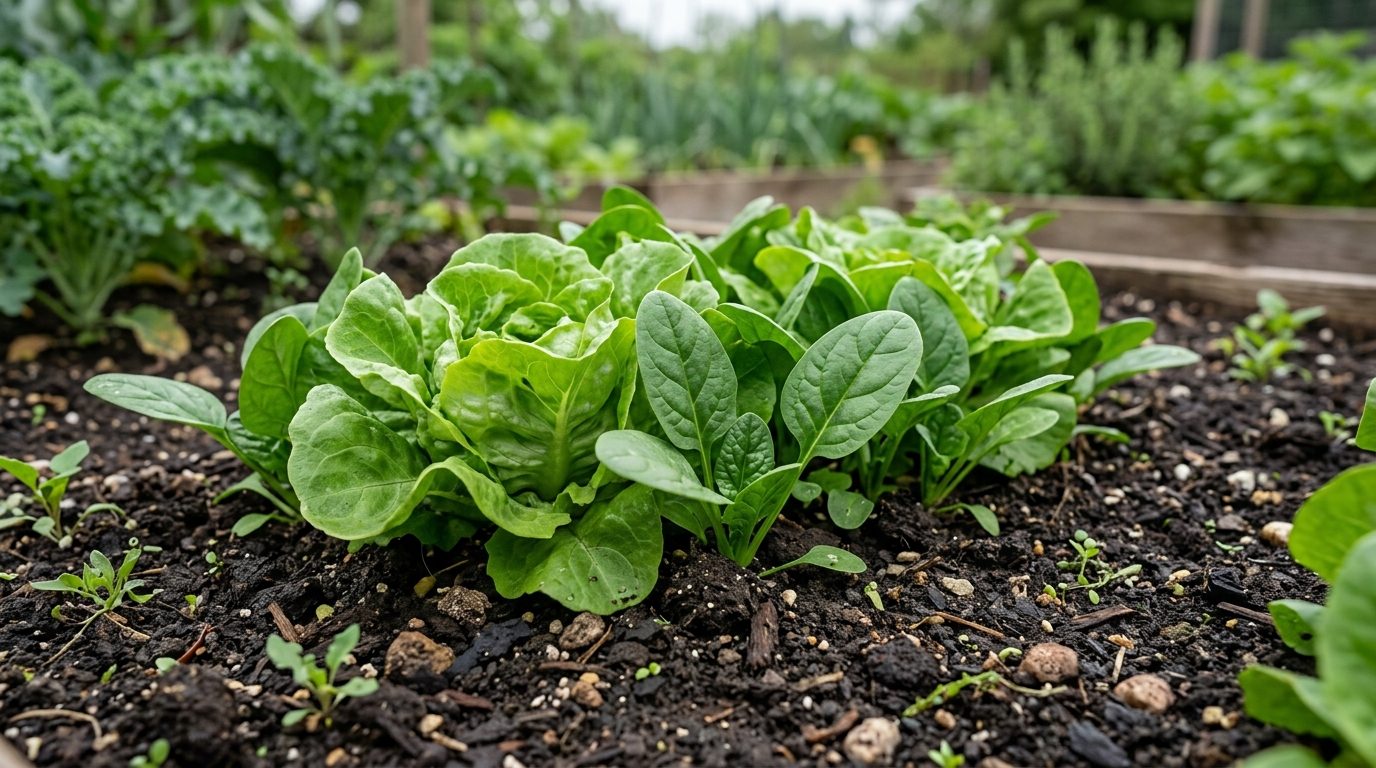
Leafy greens represent the premier candidates for intensive bed spacing. Because salad greens possess shallow, non-invasive root systems, they can be planted at half the spacing recommendations required in traditional agricultural fields. The resulting dense canopy of foliage functions as living mulch, shading the soil surface to suppress weed growth and reduce moisture evaporation.
Staggering your sowings every ten to fourteen days ensures a continuous supply of tender salad leaves from early spring through early summer, transitioning smoothly into cool-season fall harvests.
Looseleaf Lettuces, Arugula, and Perpetual Spinach
Cut-and-come-again looseleaf lettuces, spicy wild arugula, and perpetual spinach thrive in the loose organic soil of garden boxes. Sown in narrow bands across the front edges of beds, growers can harvest individual outer leaves as needed for daily salads, allowing the central crown to generate fresh foliage for weeks.
During the intense heat of midsummer, plant leafy greens in the eastern shadow cast by taller trellised tomatoes or cucumbers. This natural biological shading moderates soil temperature and prevents tender greens from bolting into bitter flowers prematurely.
Dwarf Lacinato Kale and Compact Asian Greens
Dwarf varieties of Lacinato kale, also known as dinosaur or Tuscan kale, offer puckered, dark blue-green leaves packed with minerals and vitamins. Plants remain compact at eighteen to twenty-four inches, producing tender leaves throughout summer and surviving winter frosts down to twenty degrees Fahrenheit.
Asian greens like baby bok choy and tatsoi mature with astonishing speed, forming crisp rosettes ready for kitchen stir-fries in just thirty to thirty-five days from seed. Sown as cool-weather shoulder crops, they maximize bed productivity before warm-season crops are installed.
Aromatic Companion Herbs for Home Gardening
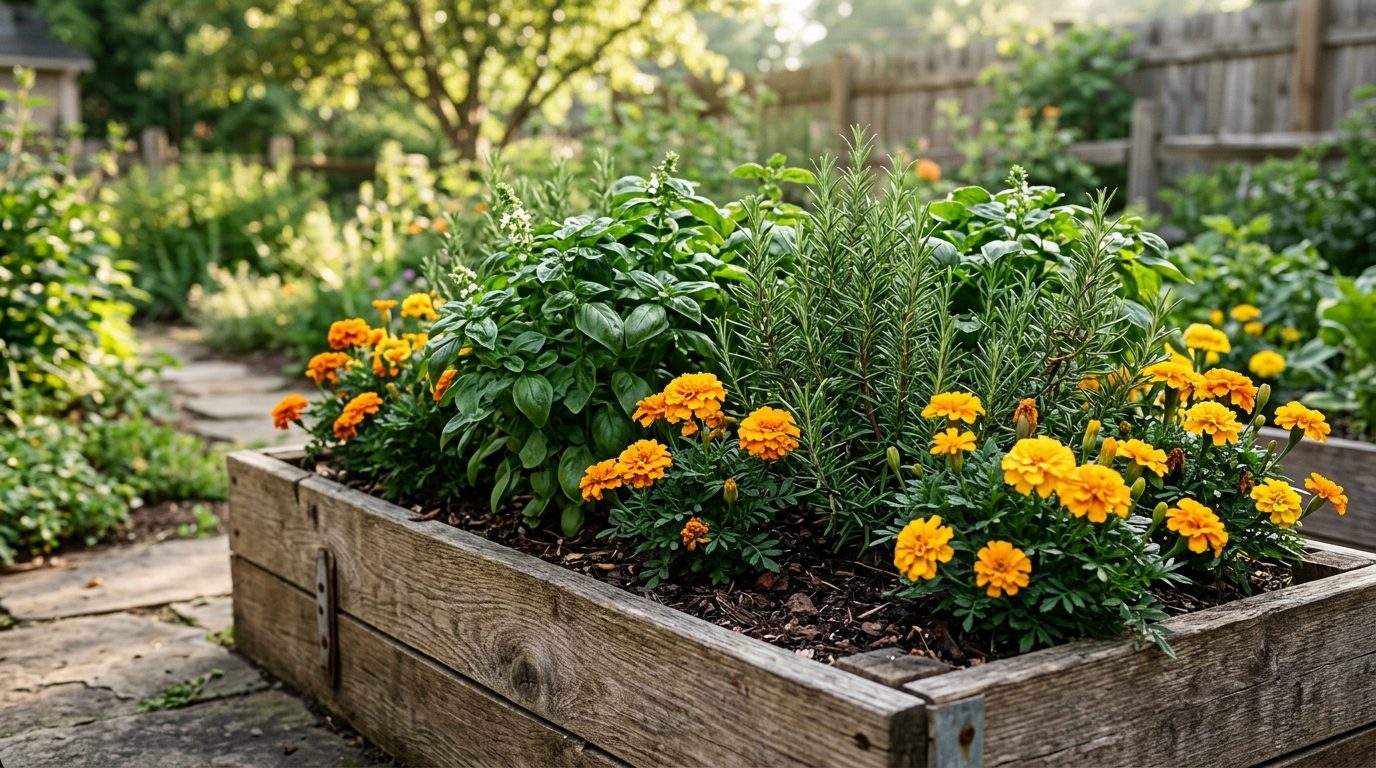
Integrating culinary herbs and flowering companion annuals directly into vegetable boxes enhances biodiversity, invites pollinating insects, and naturally confuses pest populations. Many fragrant herbs secrete volatile essential oils that mask the scent of tender host crops from destructive chewing insects.
Interplanting flowering companions creates a multi-layered, visually stunning garden bed that functions as a balanced miniature ecosystem, reducing your reliance on organic pest sprays.
Culinary Basil, Cilantro, and French Oregano
Sweet Italian Genovese basil is the premier companion for tomato plants, thriving in identical warm, fertile soil conditions and full sunshine. Gardeners frequently note that interplanting basil beside tomato roots enhances the flavor of ripening fruit while deterring hornworms and whiteflies.
Cilantro produces aromatic foliage in cool spring weather and transitions into delicate white umbel blossoms in early summer. These flowers provide vital nectar for tiny parasitic beneficial wasps and hoverflies, whose larvae prey aggressively on garden aphids.
Companion Marigolds and Borage for Natural Pest Control
French marigolds produce distinctive root exudates containing alpha-terthienyl, an organic compound that suppresses harmful root-knot nematodes in garden soil. Their vibrant golden and burgundy blossoms also attract beneficial predatory ladybugs and hoverflies throughout the season.
Starflower borage produces edible, star-shaped sky-blue flowers that draw honeybees and native bumblebees in high numbers. In addition, borage foliage repels destructive tomato hornworms while accumulating trace subsoil minerals into the topsoil layer as leaves decompose.
Deep-Rooted Vegetables for Loose Bed Soil
Root crops flourish in elevated garden boxes because the loose, friable soil blend allows roots to expand downward without encountering compacted hardpan, rocks, or heavy clay. In heavy native ground, carrots and parsnips frequently fork, bend, or stunt when striking dense subsoil layers.
In deep raised planters, carrots like Danvers and Nantes develop straight, smooth, sweet taproots reaching eight to ten inches into the soil. Sowing quick-maturing radishes alongside slow-germinating carrots serves a dual purpose: radishes break the soil crust and mature in under a month, leaving open channels for swelling carrot shoulders.
Table beets like Detroit Dark Red and Golden Beet provide both tender greens and earthy, nutrient-rich roots. Beets appreciate the loose, moist soil maintained in elevated boxes and tolerate light frosts in both spring and autumn.
Spacing Strategies for Intensive Poly-Culture Layouts
Maximizing harvests from enclosed beds requires thoughtful spatial organization. Divide your beds mentally into three vertical zones: tall vertical climbers at the north end, medium-stature bushy fruiting crops in the center, and low-growing greens and root crops along the southern perimeter. This architectural arrangement prevents taller crops from intercepting sunlight needed by compact neighbor plants.
Practice intensive square-foot grid spacing rather than traditional agricultural single-file rows. Planting vegetables on staggered, hexagonal grids eliminates wasted pathway space inside the box and maximizes soil surface shading to preserve valuable water.
Frequently Asked Questions
Which fruiting vegetables are best suited for deep planter boxes?
Determinate bush tomatoes, compact sweet bell peppers, and bush cucumber varieties are ideally suited for deep planter boxes. These varieties develop sturdy upright habits that stay within two to four feet, producing abundant yields without sprawling over neighboring crops or demanding towering trellis systems.
How does intense bed spacing benefit leafy green vegetables?
Intensive grid spacing allows shallow-rooted leafy greens to form a dense, continuous living foliage canopy over the soil. This living mulch shades the root zone, moderates soil temperature, suppresses germinating weed seeds, and conserves moisture by decreasing surface evaporation during warm summer afternoons.
Why should home growers integrate culinary herbs with vegetables?
Interplanting aromatic culinary herbs like basil, cilantro, and oregano emits volatile essential oils that mask tender vegetable crops from common insect pests. Additionally, flowering herbs produce nectar and pollen that attract vital pollinating bees and beneficial predatory insects that feed on destructive garden aphids.
Can root crops like carrots grow successfully in boxed beds?
Yes, carrots, parsnips, and beets grow exceptionally well in boxed beds because loose, stone-free soilless blends allow taproots to grow straight and deep without resistance. In dense native clay soil, root crops frequently fork, crook, and stunt when hitting compacted hardpan layers.