Knowing precisely when to plant fall vegetables allows home gardeners to enjoy a second wave of bountiful kitchen harvests, extending fresh food production well past the end of summer into chilly winter months. While most beginners pack away garden tools once summer squash and tomatoes fade in August, experienced growers understand that autumn offers milder temperatures, fewer insect pests, and more reliable rainfall for growing delicious cool-season produce.
Autumn vegetable gardening requires planning ahead during the intense heat of midsummer. Because day length shortens rapidly in autumn and plant growth rates slow as temperatures decline, crops must reach maturity or near-harvest size before the onset of heavy freezing weather. Calculating your sowing dates accurately transforms dormant late-season beds into productive cool-weather pantries.
Before sowing late-season seeds, consulting an accurate digital raised bed planner calendar helps you identify which bed spaces will become vacant as early summer crops finish their life cycles. Coordinating your planting activities with guidelines from the University of Maryland Extension fall vegetable gardening guide ensures you provide adequate moisture to cool-season seeds germinating in warm summer soil.
Cross-referencing your local frost timetable with our regional zone 6 planting schedule and comprehensive vegetable planting calendar ensures your brassica transplants and root crops develop strong root systems before severe autumn freezes arrive.
Calculating When to Start Seeds from Frost Dates
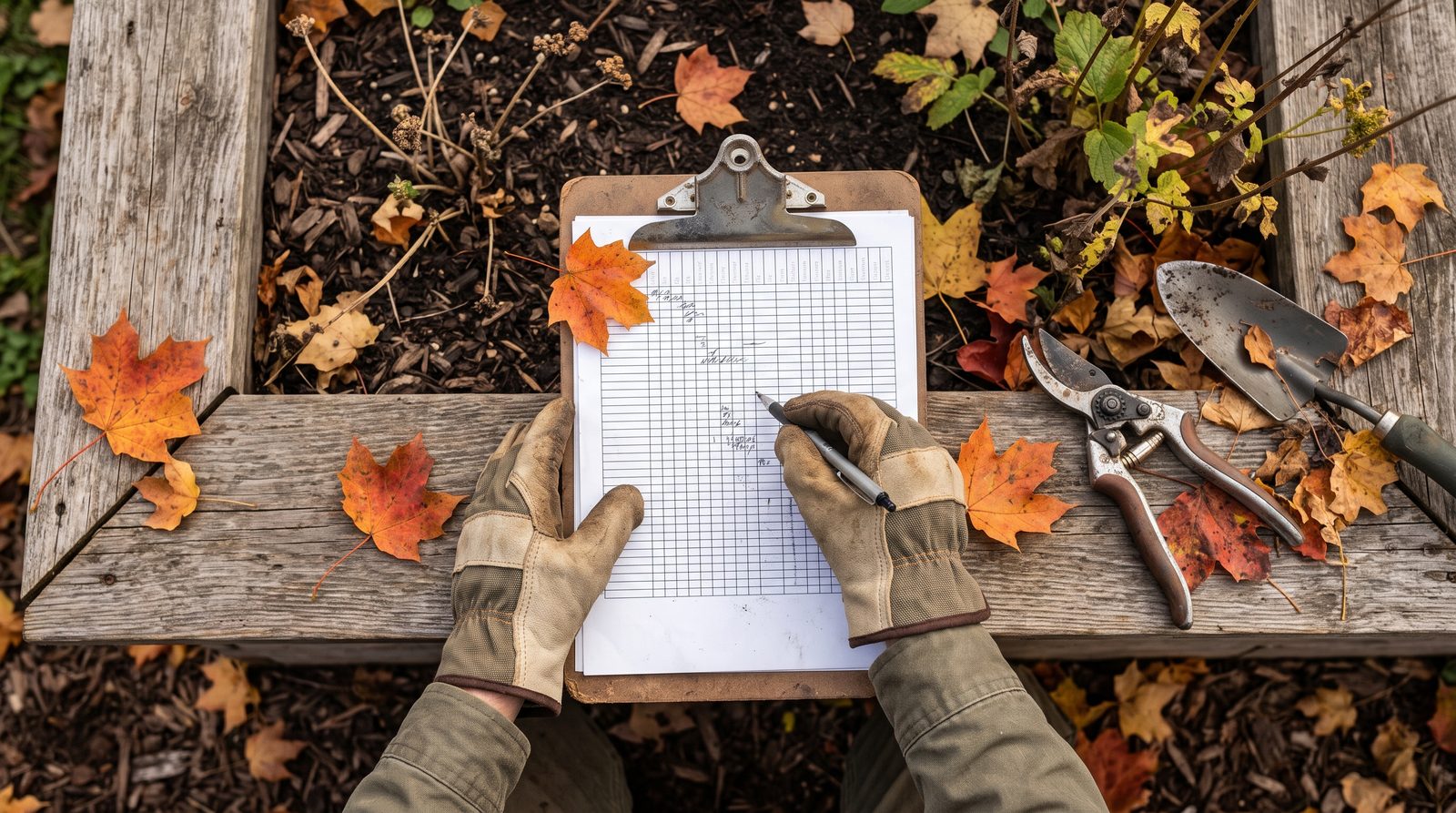
The mathematical foundation of a successful autumn garden requires working backward from your locality’s average first fall frost date. Rather than guessing, determine the statistical date when freezing temperatures (thirty-two degrees Fahrenheit) typically arrive in your area. For many temperate growing regions, this threshold falls between mid-October and early November.
To determine the exact sowing date for any autumn vegetable, consult the seed packet for the days to maturity. Add ten to fourteen days to account for the fall factor—the biological reality that diminishing day length and cooler soil temperatures slow plant metabolic growth by two to three weeks compared to rapid spring and summer expansion.
Working Backward from First Expected Autumn Freezes
Begin your calculation with your average first autumn frost date. Subtract the variety’s days to maturity plus the two-week fall factor buffer. For example, if your first expected autumn frost arrives on October twenty-fifth and you wish to cultivate a sixty-day broccoli variety, add fourteen days to the maturity rating to reach seventy-four days. Counting backward seventy-four days from October twenty-fifth places your target seed starting date around August twelfth.
If you plan to start seeds in indoor nursery flats for outdoor transplanting, add an additional four to five weeks for seedling development. This calculation often places the indoor seed starting window for autumn brassicas in late June or early July.
Accounting for the Late Autumn Persephone Period
Horticulturists define the Persephone period as the time of year when daily daylight falls below ten hours, typically occurring between mid-November and early February in northern latitudes. When daylight drops below this ten-hour threshold, vegetative growth effectively stops regardless of ambient temperature.
Therefore, autumn vegetable crops must achieve at least ninety percent of their full mature size before the Persephone period begins. Once reached, cold-hardy vegetables act as living outdoor refrigerators, holding their crisp texture and flavor in the soil for weekly winter harvesting.
Selecting Cold-Hardy Vegetables and Autumn Greens
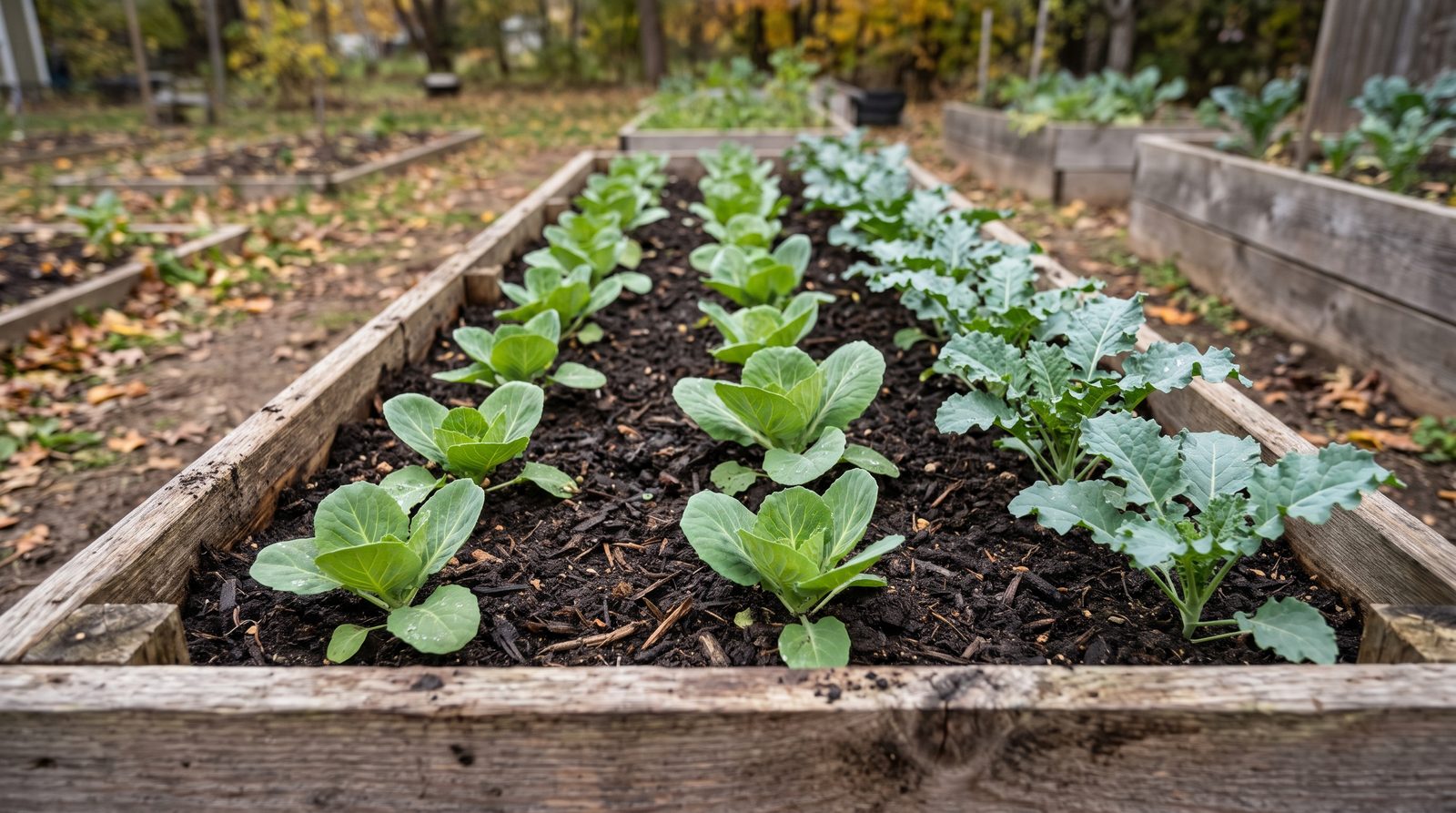
Cool-season brassicas and leafy greens are uniquely suited to autumn gardens because light frosts actually improve their flavor. When exposed to chilly night temperatures, cold-tolerant plants convert stored starches into soluble plant sugars within cell walls. These natural sugars act as biological antifreeze, preventing cellular rupture during freezes while imparting a sweet, crisp flavor unknown in summer harvests.
Sowing brassicas in late summer guarantees that heading and foliage production occur during the pleasant, crisp days of autumn rather than the scorching heat of early summer.
Sowing Broccoli, Cabbage, and Brussels Sprouts in July
Broccoli, green cabbage, cauliflower, and Brussels sprouts require an extended growing window to form dense heads and sweet buds. Start seeds indoors or in shaded outdoor nursery beds in early to mid-July. Transplanting sturdy four-week-old starts into garden boxes in early August ensures plants establish broad root systems before night temperatures decline.
Keep newly transplanted brassicas well-watered during August heatwaves. Applying a layer of clean straw mulch around plant bases cools soil temperatures and prevents moisture stress during critical vegetative development.
Planting Cold-Tolerant Spinach, Kale, and Swiss Chard
Leafy greens represent some of the cold-hardiest plants in the vegetable garden. Sown directly in beds from mid-August through mid-September, varieties like Bloomsdale Long Standing spinach and Winterbor kale continue producing crisp leaves long after tender summer nightshades have been killed by frost.
Kale and collards comfortably survive temperatures dipping into the low twenties, while mature winter spinach withstands temperatures down to ten degrees Fahrenheit under a light layer of snow or fabric row cover.
Timing Root Crops for Sweetened Fall Harvests
Root vegetables planted in late summer develop exceptional sweetness as autumn nights turn cold. Because elevated garden boxes contain loose, aerated soil blends that do not compact under autumn rains, taproots swell freely without meeting structural resistance, producing smooth, tender, straight crops.
Direct-seed root vegetables into vacant spaces where spent early summer bush beans or summer lettuces have been cleared away. Top-dress the planting area with a two-inch layer of rich compost to restore organic nutrients before sowing.
Direct Sowing Carrots, Beets, and Rutabagas in August
Carrots and table beets for autumn eating should be direct-sown in early to mid-August. Varieties like Danvers Half Long carrots and Detroit Dark Red beets tolerate moderate frosts and can remain in the soil for harvesting throughout November and December.
Ensure consistent topsoil moisture during late August germination. Covering newly seeded carrot rows with a lightweight board or burlap sack for three to four days retains moisture around shallow seeds, preventing soil crusting until germination begins.
Fast-Maturing Radishes and Turnips for Late Autumn
French Breakfast radishes and Purple Top White Globe turnips grow with remarkable speed, reaching culinary maturity in twenty-five to forty days. Direct-sown throughout September, these rapid growers yield crisp, juicy roots that thrive in autumn chill without developing the woody, pungent flavors common to hot-weather summer harvests.
Both radish and turnip greens are cold-hardy, providing nutritious, tender saute greens in addition to underground root crops for late autumn meals.
Comprehensive Calendar for Garden Crops to Plant
To help organize your late-season garden schedule, the following reference table outlines target sowing windows, approximate days to maturity, and frost tolerance thresholds for popular autumn vegetable crops.
| Vegetable Variety | Target Sowing Window | Days to Maturity | Frost Tolerance Level |
|---|---|---|---|
| Broccoli (transplants) | July 1 – July 20 | 55 – 65 days | Hardy (tolerates 26°F) |
| Cabbage (transplants) | July 1 – July 15 | 65 – 80 days | Hardy (tolerates 25°F) |
| Carrots (direct sow) | July 25 – August 15 | 60 – 75 days | Very Hardy (tolerates 20°F) |
| Beets (direct sow) | August 1 – August 20 | 50 – 60 days | Moderate (tolerates 28°F) |
| Kale (direct sow) | August 1 – August 25 | 50 – 55 days | Very Hardy (tolerates 15°F) |
| Spinach (direct sow) | August 15 – September 15 | 40 – 45 days | Extreme (tolerates 10°F) |
| Radishes (direct sow) | September 1 – September 25 | 25 – 30 days | Moderate (tolerates 28°F) |
Consulting our regional guidelines from the University of Maryland Extension seasonal planting calendar ensures you fine-tune these date brackets to match your exact local hardiness microclimate.
Season Extension Techniques for Winter Harvests
Implementing basic, low-cost season extension structures shields late-season crops from damaging desiccating winds and heavy freezing rain, prolonging your harvest window by an additional four to eight weeks into deep winter.
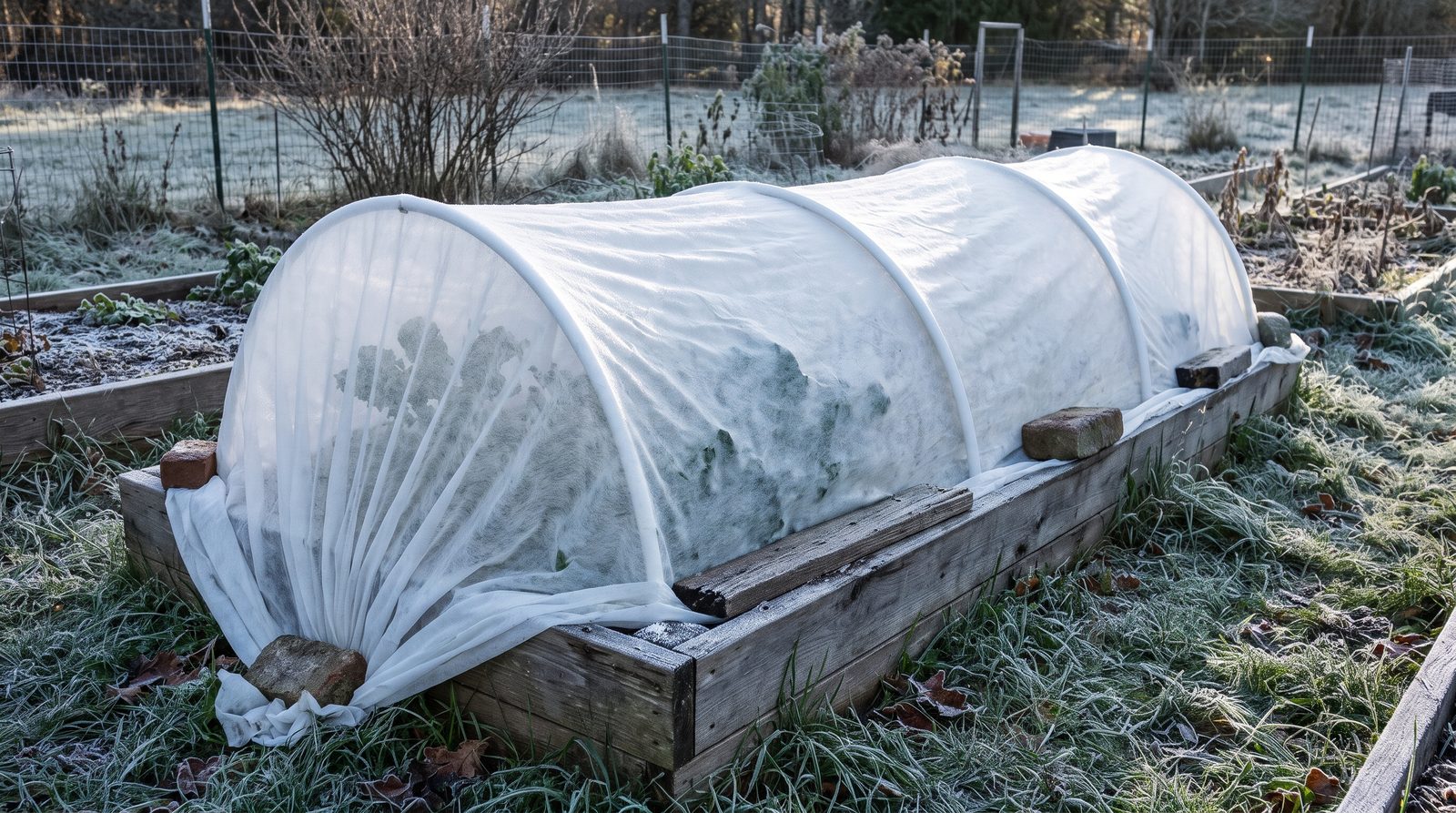
Install flexible PVC or electrical conduit hoops over your wooden box frames, creating support ribs for floating spun-bond fabric row covers. A medium-weight polypropylene garden fabric raises temperatures underneath by four to eight degrees Fahrenheit while admitting eighty-five percent of natural daylight and water.
For sub-zero winter temperatures, place a clear six-mil polyethylene plastic cover over the fabric layer to construct a miniature unheated greenhouse or low tunnel. Vent the ends on sunny winter afternoons when interior temperatures rise above fifty degrees Fahrenheit to prevent humidity buildup and fungal disease.
Frequently Asked Questions
How do you calculate midsummer seed sowing dates for autumn crops?
To calculate midsummer sowing dates, determine your locality’s average first fall frost date, then subtract the crop’s days to maturity plus a ten-to-fourteen-day buffer for shortening daylight. This ensures vegetables reach harvest maturity before freezing weather and diminishing sunlight slow vegetative development.
Why do cool-weather vegetables taste sweeter after light autumn frosts?
Cool-weather vegetables taste sweeter because exposure to chilly temperatures stimulates plants to convert stored starches into natural soluble sugars. These sugars act as cellular antifreeze to protect plant tissues from ice crystal damage while enhancing flavor and crispness in leafy greens and root crops.
Which root vegetables can withstand freezing soil conditions?
Carrots, parsnips, and rutabagas can withstand freezing soil conditions, particularly when insulated under a thick layer of straw or shredded leaf mulch. Gardeners can leave these cold-hardy taproots in the ground throughout late autumn and winter, harvesting fresh, crisp roots as needed.
What protective structures allow gardeners to harvest vegetables through winter?
Simple low tunnels constructed from PVC hoops covered with floating fabric row covers or clear six-mil greenhouse plastic provide effective winter protection. These structures elevate interior ambient temperatures by four to ten degrees Fahrenheit and shield crops from freezing rain and ice, enabling winter harvests.